

Quick answer
Icy Strait Point enforces no whale watching dress code: entry is free at 0 USD and no garment is required, though the site's 08:00–17:00 daily operating pattern and multi-hour boat excursions make deck-ready clothing the practical choice. Vessels run fast across Icy Strait, so conditions on an open deck differ sharply from conditions on the dock.
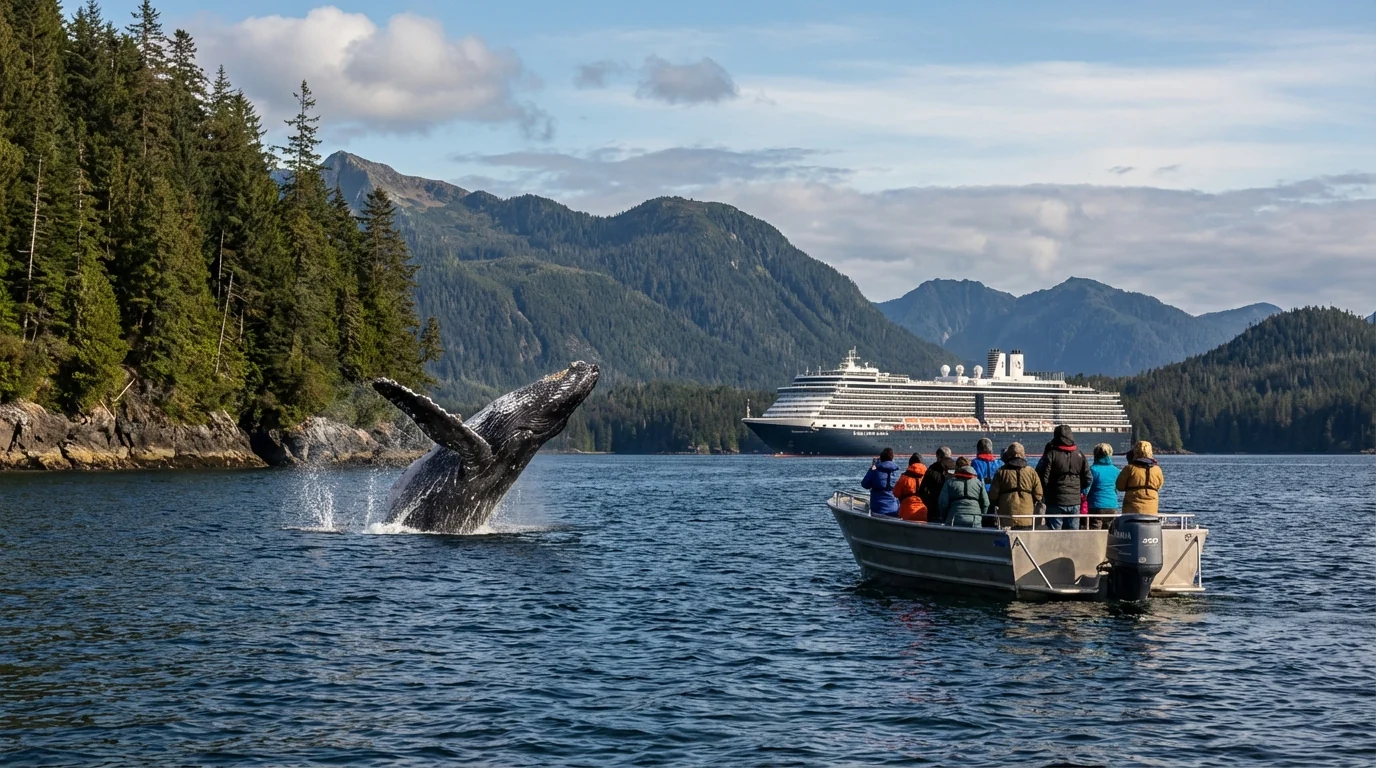
Entry to Icy Strait Point costs 0 USD, and no captain, naturalist or host will turn a visitor away over what they are wearing. That single fact resolves most of what people mean when they search for a whale watching dress code: there is no enforced standard, no jacket rule, no ban on jeans. What exists instead is a set of physical conditions that reward preparation and punish improvisation. The site sits at 108 Cannery Rd in Hoonah, on Chichagof Island, built around a restored salmon cannery on the shore of Icy Strait. Boats leave from the dock a short walk from the cannery buildings. Everything that follows happens on the water, and the water sets the terms. Those terms are less about temperature than about motion. Most vessels running Icy Strait Point whale watching tours head toward Point Adolphus, the humpback feeding ground across the strait, and they run fast to get there. A boat moving at speed manufactures its own wind regardless of what the forecast says, and the open deck is where the sightings happen: humpbacks surface without warning, and passengers who have retreated to the heated cabin hear the announcement several seconds after the fluke has gone. Sea spray, a low marine layer and long stretches of shade behind Chichagof's headlands all add to the effect. Icy Strait is a working corridor of the Inside Passage, busy with sea lions, bald eagles and the occasional orca, so eyes stay outward for the entire crossing. Naturalists on board narrate the behaviour, sometimes lowering a hydrophone; guests spend most of that time standing at the rail rather than seated. Layering is the standard answer, and this page's dedicated dos-and-don'ts section covers it properly. The broader point for anyone comparing what to wear whale watching in Southeast Alaska is that comfort on deck determines how much of the excursion a visitor actually witnesses. Binoculars, a camera strap and dry hands matter for the same reason. Timing shapes the rest. The recommended arrival window is 08:00 to 16:00, which avoids the mid-day crush and leaves room for excursions that run several hours end to end. Cruise passengers tendering ashore rarely control their own schedule, so the practical move is to confirm departure times against the ship's all-aboard call before committing to a longer trip. Independent travellers arriving through Hoonah have more latitude and generally use it, booking earlier departures when Icy Strait is calmest. Reservations are handled through the site's booking pages; questions that need a human go to +1-907-789-8600 or icystraitpoint.com. Entry to the grounds stays free of charge; individual excursions and activities require separate payment. The Huna Tlingit interpreters, the shoreline trails and the restaurants above the dock all sit within walking distance, which means a whale watching dress code decision made at breakfast has to survive an entire day ashore, not just the hours afloat. Visitors who plan for the deck and adapt inland tend to fare better than the reverse. Read the conditions rather than a rulebook, and the rest of the day organises itself.
“The code on an Icy Strait Point whale boat is written by the deck, not by the dock.”
Essential Whale Watching Dress Code and Safety Guidelines
On an open boat deck in Icy Strait, what you wear decides whether you stay steady, warm, and able to watch. Wet cotton, loose scarves, and smooth-soled shoes turn a calm crossing into a cold, slippery one.
Do
- Wear moisture-wicking base layers next to the skin
- Add a windproof, waterproof outer shell before boarding
- Choose closed-toe shoes with rubber, non-slip treads
- Secure hats and hoods with a chin cord
- Keep one hand free for deck rails
- Stow camera straps around your neck, not dangling
Don't
- Skip cotton hoodies and jeans that hold water
- Avoid smooth-soled boat shoes, sandals, or heels
- Do not remove your outer layer mid-crossing
- Never lean over rails for a closer shot
- Do not block deck walkways with open bags
- Avoid loose scarves that catch wind or railings
Whale Watching Dress Code and Preparation Checklist
Beyond what you wear, a short list of gear and timing moves makes the difference between watching whales comfortably and squinting into the wind.
-
Book your whale watching excursion early — Summer sailings from Hoonah fill weeks ahead, and entry to Icy Strait Point is free while excursions are paid separately.
-
Confirm booking details by phone — Call +1-907-789-8600 or check icystraitpoint.com to verify your sailing before travel.
-
Carry photo ID and booking confirmation — Check-in staff match names to the manifest before boarding.
-
Pack compact 8x42 binoculars — Wider exit pupils hold steady on a moving deck and cut glare off the water.
-
Fit every camera with a neck strap — Wet railings and swell make handheld gear easy to drop overboard.
-
Bring polarized sunglasses and reef-safe sunscreen — Light reflecting off Icy Strait burns faster than the air temperature suggests.
-
Load a dry bag for electronics — Spray reaches the open rail even on calm mornings.
-
Arrive between 08:00 and 16:00 — This window avoids mid-day crowds and leaves time for a multi-hour trip.
Seasonal Considerations for Your Whale Watching Dress Code
The Icy Strait Point whale watching season typically runs from May through September, with peak activity aligning with salmon runs. Choosing your travel window requires balancing shifting temperatures against the predictable rhythm of daily arrivals.
May and September
Lower cruise ship trafficCooler, 40°F–55°F; requires heavier layers.
These shoulder months offer quieter experiences but demand thermal base layers and waterproof gear.
June and July
High passenger volumeMild, 50°F–65°F; consistent marine breezes.
Expect warmer daytime temperatures, though boat wind chill makes windproof shells necessary.
August
Peak seasonal volumeModerate, 50°F–60°F; increased rainfall probability.
Late summer brings wet conditions, making waterproof rain gear and rubber boots essential for deck comfort.
Weekday mornings
Minimal congestion—
Visiting early in the week helps avoid the heaviest cruise ship crowds and provides more space on excursion vessels.
Verdict: For the best balance of lower crowds and manageable weather, aim for weekday mornings in late May or early September.
Icy Strait Point Operational Hours
Icy Strait Point operates daily throughout the week to accommodate visitors and scheduled excursions. Please use the following hours to coordinate your arrival and activity planning.
| Monday | 08:00–17:00 | |
|---|---|---|
| Tuesday | 08:00–17:00 | |
| Wednesday | 08:00–17:00 | |
| Thursday | 08:00–17:00 | |
| Friday | 08:00–17:00 | |
| Saturday | 08:00–17:00 | |
| Sunday | 08:00–17:00 |
Check availability
Frequently Asked Questions About Whale Watching Dress Code
Everything you need to know about whale watching dress code